Thursday, 26 September 2019

Tortoise


The group had specifically asked if I could bring in another animal, so I borrowed a colleague's tortoise and we watched it scoot about the floor for a while. Before I gave out the poetry templates, I issued the children with colour charts like this one so they could gauge the exact shades on the tortoise. For a warm-up, I'd asked them to think of processes in nature which happened very slowly, the sort of thing you could only see properly if you used time-lapse photography, so they were already in a poetic frame of mind.

Thursday, 19 September 2019

Box of Whackiness


This is an idea I came across on Twitter. It was the idea of @buntyhoven's daughter and she kindly allowed me to share it. The premise is, you create a box of wholesome, no-props-required dares for use at a sleepover or party.

It does need a bit of prep. Write out your own dares (use the list above or think of your own) and let the children have a turn each so they get the idea. My group of Y5 and 6s absolutely loved this part.

Unless you have a supply of small boxes already made, the children will need to build their own. Google 'cuboid net' and then print the net onto a card for each student. There's a good net here: cuboid net. Provide the children with felt tips and perhaps sticky shapes to jazz up the sides of the box. They'll need scissors and glue to assemble their boxes too.

When they've finished, let them take turns picking dares out of each other's boxes.

I think this session could have lasted for two hours rather than the single one we had, but next week we have a visitor coming...

Thursday, 12 September 2019

Ridiculous New School Rules


As usual for this point in the term, I don't have permission to post any of the children's work yet. Instead here's the plan I used, and you'll just have to take my word for it the children's versions were very funny.

I took the idea for whacky new school rules from Brian Moses' blog, which is a brilliant fund of ideas for poetry and other forms of creative writing. We began by listing some of the normal rules we have in school and the reasons behind them. Then I suggested there might be some new rules coming in at half term, for instance if you own a pet, you have to ride it to school. ("But I have a goldfish, Miss!" "I'd crush my hamster!")

The children quickly understood we were looking for silly and outrageous ideas, and I gave them these handouts to help start them off.

Thursday, 11 July 2019

Chains


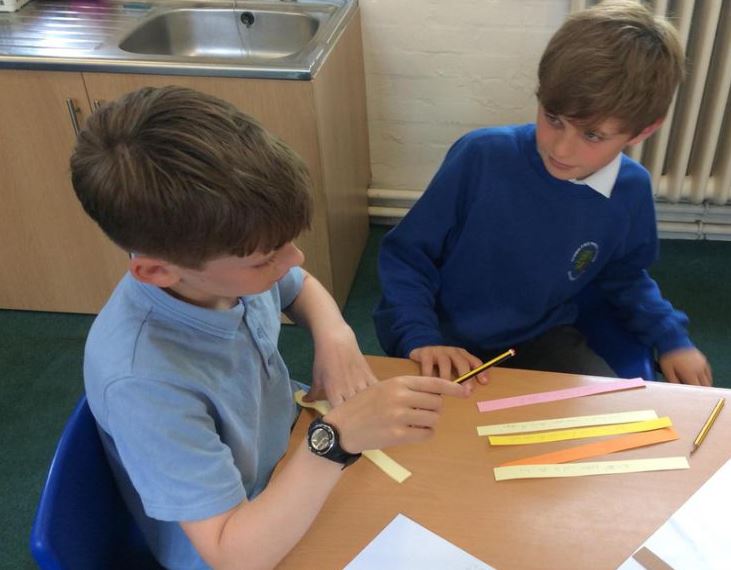
To prepare for the session, cut up some paper strips. They don't have to be coloured; you could use white scrap paper if resources are stretched. 
You'll need enough glue sticks for one-between-two.


We got musical accompaniment to one of the stories!


Here's a totally frivolous activity for the end of term. The children worked in pairs and were asked to come up with a story chain where every link had one word written on it. It's an interesting dynamic, creating a narrative one word at a time, especially when it's two writers working together. 

I offered a small prize for the longest chain and another for the most entertaining story.

Wednesday, 3 July 2019

Very Honoured to be on Brain Moses' Poetry Blog


You can read Brian's post on his amazing and inspirational blog:  Welcome to the Ssssssnake Hotel

Tuesday, 2 July 2019

Elfje Poems


An Elfje poem is a very short poem based on 11 syllables. The pattern is:

1
2
3
4
1

As long as the children are clear about what a syllable is, Elfje poems are very straightforward to write, and an alternative to haikus. Today a member of staff brought in her guinea pigs and, after we'd observed their essential piggy qualities, the group went off and wrote their Elfjes. I don't have permission to share their work on this blog, so instead I give you some examples of my own. I also include some fun guinea pig facts for you to share.

Any animal would be a good stimulus for an Elfje poem if cavies aren't available.

Thursday, 27 June 2019

Inside My Brain


This would make a nice start-of-term activity, or you could use it in a Learning mentor session or a Nurture Group to get to know your pupils.

Preparation: print out a large outline of a brain for each child, together with a patterned colouring-in page.

Explain they're going to fill their brains with words that describe what's important to them - family members and friends, special places, pets, foods, pastimes. They should aim not to leave many gaps, so if they run out of ideas they can put a word twice or even more. They could vary the size of the words to signify the relative importance or they could write the words in a variety of colours. 

Then they stick the brain onto the patterned paper and colour in around it.

This was a very relaxing session that could have lasted over an hour but we ran out of time. The children are taking their work home to finish and I've asked them to bring them back next week to share (if they want to).